
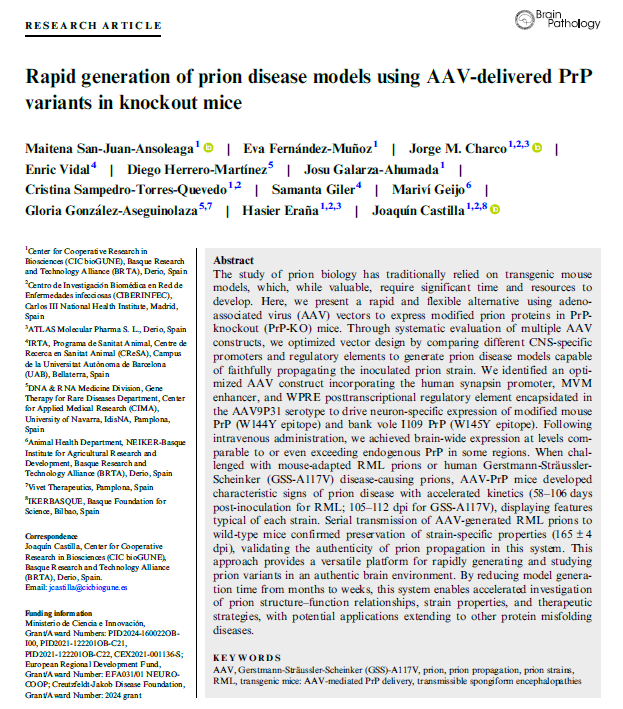
Rapid generation of prion disease models using AAV-delivered PrP variants in knockout mice
Rapid generation of prion disease models using AAV-delivered PrP variants in knockout mice
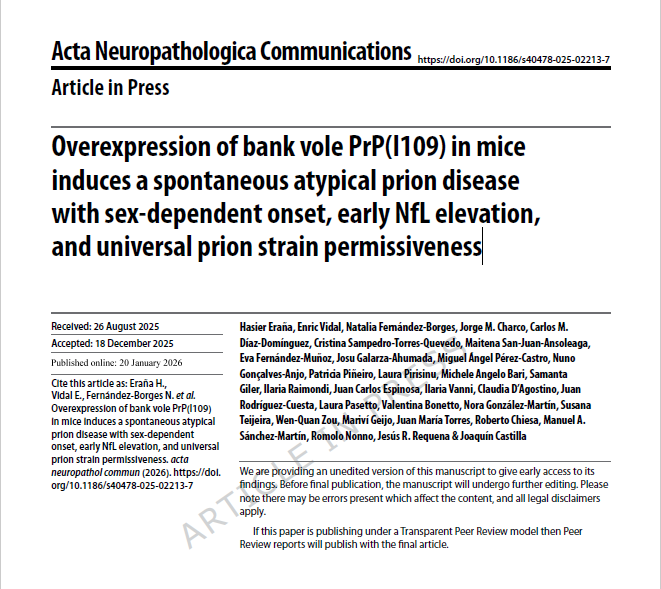
Overexpression of bank vole PrP(I109) in mice induces a spontaneous atypical prion disease with sex-dependent onset, early NfL elevation, and universal prion strain permissiveness
Overexpression of bank vole PrP(I109) in mice induces a spontaneous atypical prion disease with sex-dependent onset, early NfL elevation, and universal prion strain permissiveness
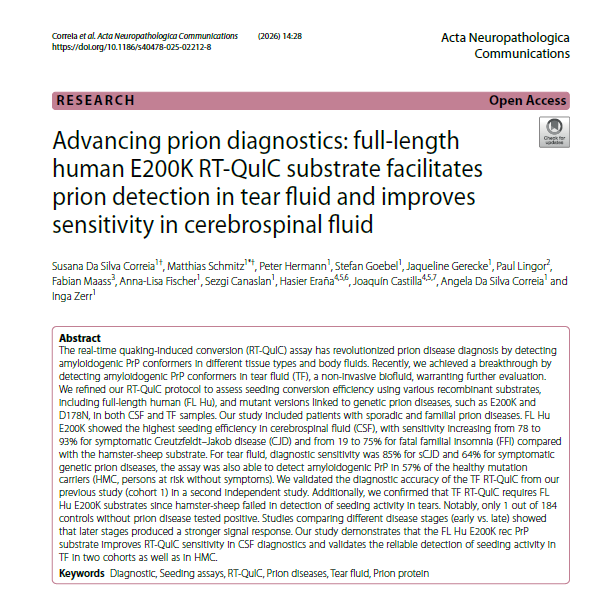
Advancing prion diagnostics: full-length human E200K RT-QuIC substrate facilitates prion detection in tear fluid and improves sensitivity in cerebrospinal fluid
Advancing prion diagnostics: full-length human E200K RT-QuIC substrate facilitates prion detection in tear fluid and improves sensitivity in cerebrospinal fluid
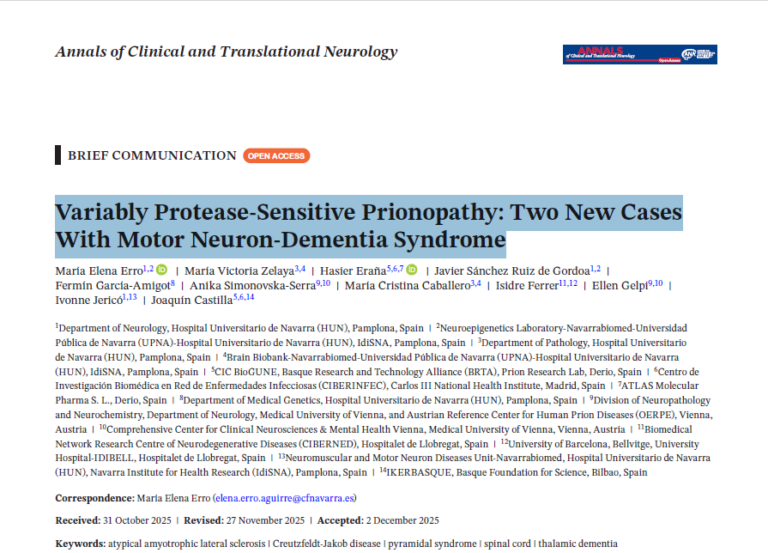
Variably Protease-Sensitive Prionopathy: Two New Cases With Motor Neuron-Dementia Syndrome
Variably Protease-Sensitive Prionopathy: Two New Cases With Motor Neuron-Dementia Syndrome Investigadores de CIC bioGUNE y ATLAS Molecular Pharma, en colaboración con centros europeos, han descrito dos nuevos casos de Variably
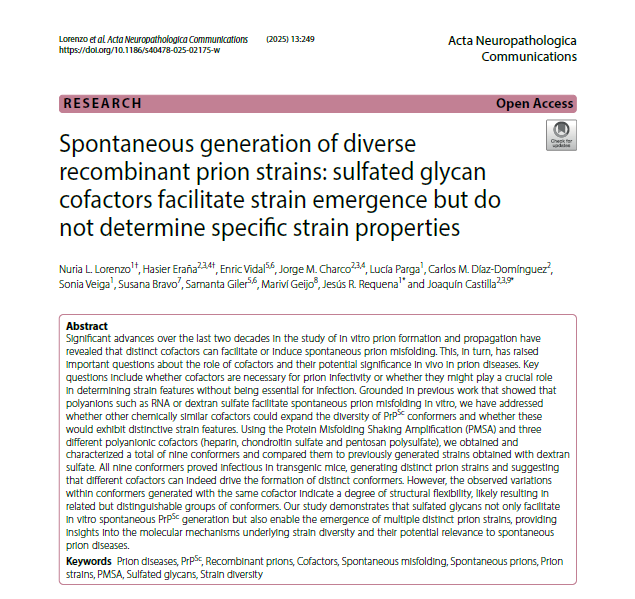
Spontaneous generation of diverse recombinant prion strains: sulfated glycan cofactors facilitate strain emergence but do not determine specific strain properties
Spontaneous generation of diverse recombinant prion strains: sulfated glycan cofactors facilitate strain emergence but do not determine specific strain properties ¿Qué pasaría si pudiéramos observar el instante en que un
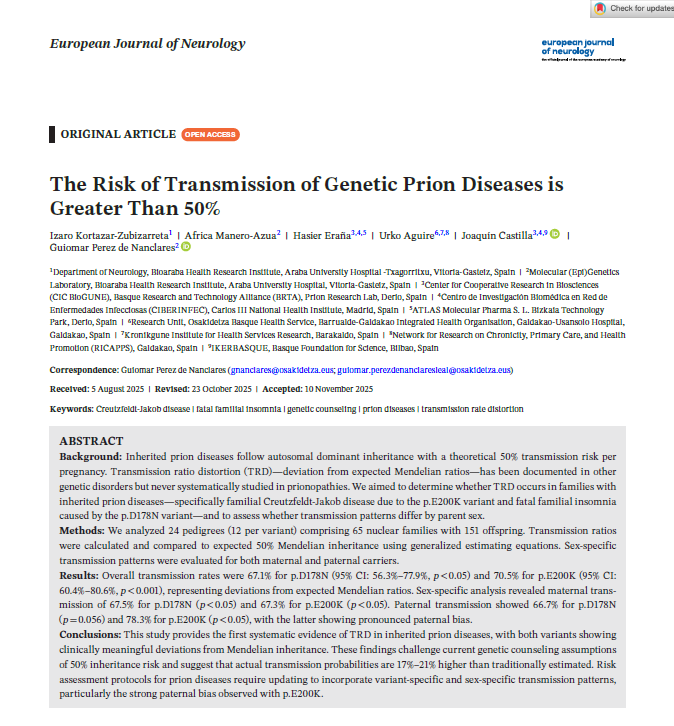
The Risk of Transmission of Genetic Prion Diseases is Greater Than 50%
The Risk of Transmission of Genetic Prion Diseases is Greater Than 50% Durante décadas se ha asumido que las enfermedades priónicas hereditarias siguen las reglas básicas de Mendel: un 50%
A comprehensive phylogeny of mammalian PRNP gene reveals no influence of prion misfolding propensity on the evolution of this gene
The study shows that prion properties are conserved without post-translational modifications. An international team led by researchers from IRTA-CReSA and CIC bioGUNE has shown that the fastest known prion strain, CWD-vole, maintains its properties even in the absence of glycosylation and membrane anchoring. Using...
Effect of primary structural variation on cervid prion protein in flexibility, stability, and spontaneous misfolding propensity
Cofactors favour prion misfolding, but are not essential to generate infectivity A multidisciplinary team led by researchers from CIC bioGUNE and in collaboration with partners from the NEURO-COOP project, has demonstrated that the prion protein [...]
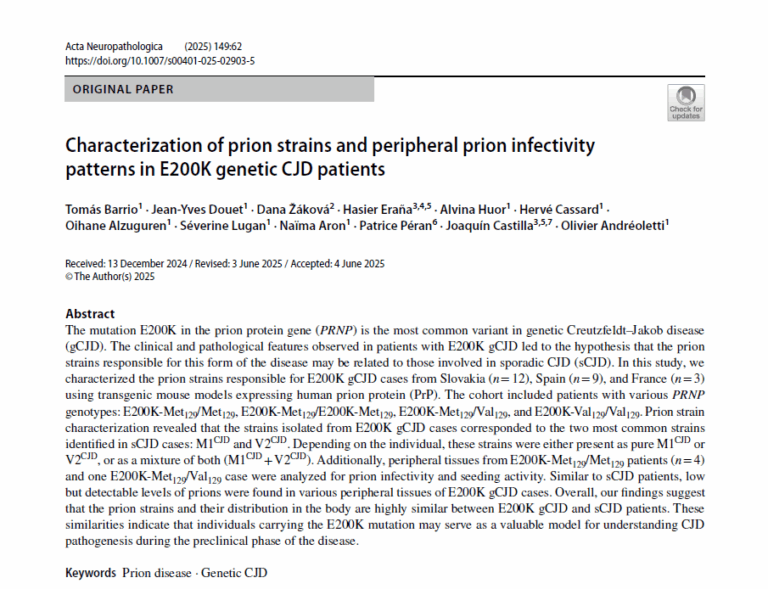
Characterization of prion strains and peripheral prion infectivity patterns in E200K genetic CJD patients
Researchers from the Centre for Encephalopathies and Emerging Communicable Diseases of the University of Zaragoza, within the framework of the NEURO-COOP project, have managed to detect prions (PrP^Sc) in the oocytes and ovaries of sheep naturally infected with classical scrapie, using the ultra-sensitive PMCA (Protein Misfolding Cyclic Amplification) technique.
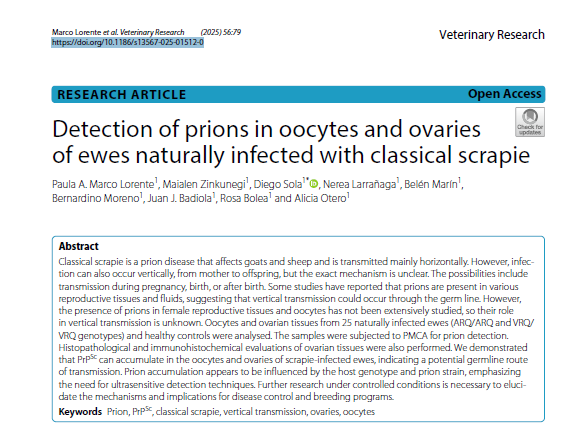
Detection of prions in oocytes and ovaries of ewes naturally infected with classical scrapie
Researchers from the Centre for Encephalopathies and Emerging Communicable Diseases of the University of Zaragoza, within the framework of the NEURO-COOP project, have managed to detect prions (PrP^Sc) in the oocytes and ovaries of sheep naturally infected with classical scrapie, using the ultra-sensitive PMCA (Protein Misfolding Cyclic Amplification) technique.
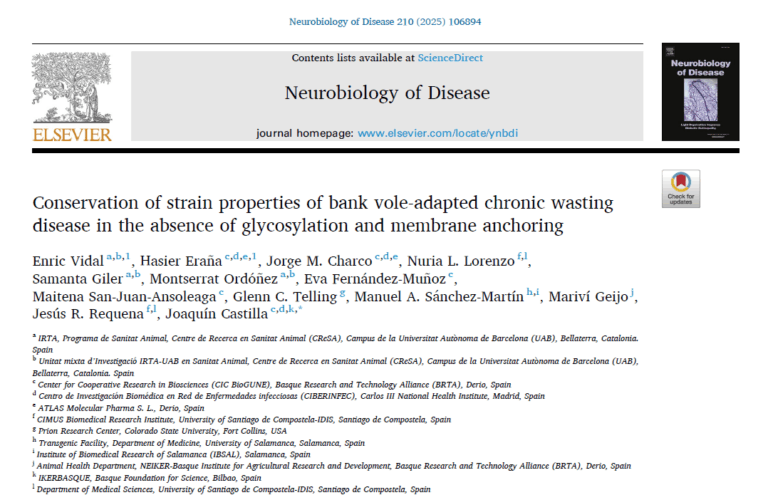
Conservation of strain properties of bank vole-adapted chronic wasting disease in the absence of glycosylation and membrane anchoring
The study shows that prion properties are conserved without post-translational modifications. An international team led by researchers from IRTA-CReSA and CIC bioGUNE has shown that the fastest known prion strain, CWD-vole, maintains its properties even in the absence of glycosylation and membrane anchoring. Using...
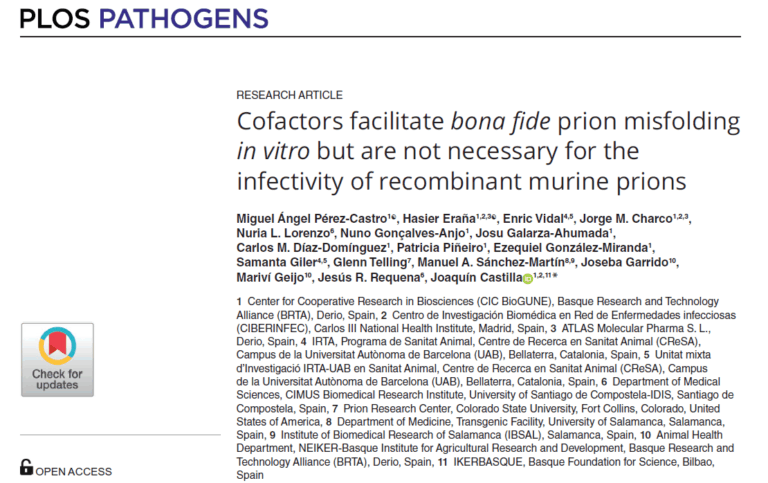
Cofactors facilitate bona fide prion misfolding in vitro but are not necessary for the infectivity of recombinant murine prions
Cofactors favour prion misfolding, but are not essential to generate infectivity A multidisciplinary team led by researchers from CIC bioGUNE and in collaboration with partners from the NEURO-COOP project, has demonstrated that the prion protein [...]
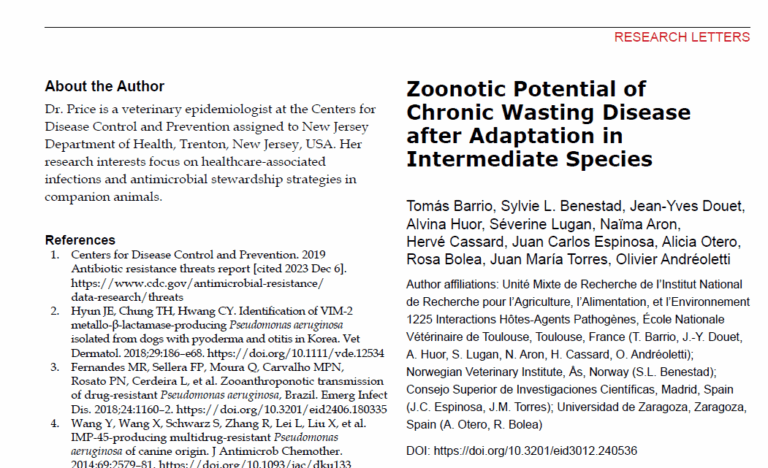
Zoonotic Potential of Chronic Wasting Disease after Adaptation in Intermediate Species
A strain of chronic wasting disease in elk shows increased zoonotic potential after passage through sheep An international study led by French scientists, ...
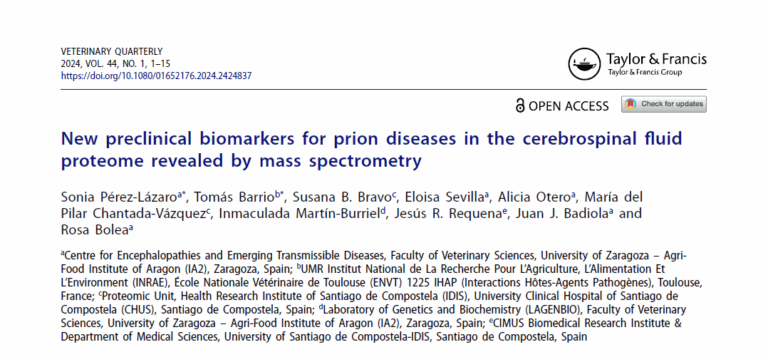
New preclinical biomarkers for prion diseases in the cerebrospinal fluid proteome revealed by mass spectrometry
A team of researchers led by the University of Zaragoza has identified five proteins in cerebrospinal fluid (CSF) that could act as early biomarkers for the diagnosis of prion diseases, before the first clinical symptoms appear. The study, carried out in sheep with scrapie - a natural model of these neurodegenerative pathologies - used advanced mass spectrometry and ELISA techniques to analyse the alterations in the CSF proteome.
 English (UK)
  Español
  Français