Autor: Joaquín Castilla
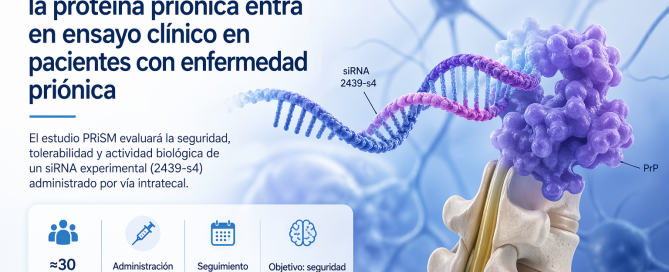
In April, via the website of the Spanish Foundation for Prion Diseases, the community was informed that PRiSM, the first human trial of a bivalent siRNA designed to reduce the production of prion protein (PrP), had begun recruiting patients with symptomatic prion disease (read the news). On 14 October 2026, the team at the Broad Institute, the developer of this novel therapy, announced a further development: the trial is opening a separate arm for presymptomatic individuals who carry genetic variants associated with a high lifetime risk of developing the disease. Translated with DeepL.com (free version)
Why is it important?
According to the research team’s statement, the decision to open this arm is partly due to the fact that the initial safety data in symptomatic patients have been acceptable. The researchers explain that it is necessary to test the drug separately in both groups, because its safety and how it behaves in the body may differ, and because their ultimate aim is for the treatment to be effective for both patients and carriers. Furthermore, each new, higher dose will first be tested in symptomatic patients before being administered in the pre-symptomatic arm.
What this essay is and what it is not
- It remains a phase 1 trial involving a single dose, administered via lumbar puncture.
- Its aim is to identify a safe dose that sufficiently reduces PrP levels in the cerebrospinal fluid. It is not designed to demonstrate whether the drug benefits participants, and there are as yet no data from human trials showing any benefit.
- It is being carried out at just five centres in the United States. As it is funded by the NIH, it is not possible to take part from outside the country, and FDA regulations do not permit compassionate use either.
- The trial is also continuing to recruit symptomatic patients in the early stages.
The researchers themselves ask that anyone taking part should do so as a contribution to the research, not with the expectation of any direct benefit to their health.
Although it is not possible to take part from Spain, this is very significant news for carrier families: for the first time, a PrP-reducing strategy of this kind is being trialled in people before symptoms appear – which is precisely when such therapies could be most effective.
Further information (in English)
- Announcement on the research team’s blog (CureFFI)
- Frequently asked questions about the trial
- Anuncio de Prion Alliance
- Trial details on ClinicalTrials.gov (NCT07444580). According to the team, the update with the new arm is pending review, so it may take a few days to appear.
 English (UK)
 Español
 Français