Efavirenz, an existing drug, is moving into a clinical trial for Creutzfeldt-Jakob disease
A clinical trial registered on ClinicalTrials.gov is investigating whether efavirenz, a drug that has been used for years in the treatment of HIV, may be beneficial in Creutzfeldt-Jakob disease (CJD). According to the registry, which lists all experimental drug trials in humans, this is a multicentre, randomised, double-blind, placebo-controlled study; in other words, a study to be conducted across different hospitals, in which patients will be treated with either a placebo or the drug at random, without the doctors or study participants knowing who is taking the placebo and who is taking the drug. The study is being led by Xuanwu Hospital in Beijing, and in the latest available update, recruitment was still not open, which implies that they have not yet begun administering the treatment to any patients.
The main aim of the study is very clear: to determine whether efavirenz can prolong survival in people with CJD. Participants will receive either efavirenz or a placebo, and the treatment will be administered orally, starting with 200 mg a day for the first week and then increasing to 400 mg a day. Inclusion criteria include patients aged 18 to 80 with probable sporadic CJD or a genetically confirmed hereditary form, who still retain some functional ability and have a carer who can accompany them throughout the study.

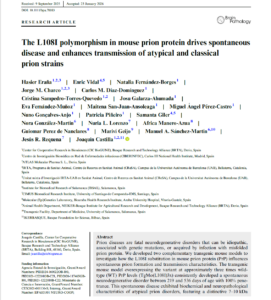
Why was the decision made to test this drug on prions? The reason lies in a recent preclinical study published in JCI Insight, which studied efavirenz in mice genetically modified to express the human prion protein and infected with sporadic CJD prions. In that model, oral treatment slowed the progression of the disease and prolonged survival, even when treatment was started at a relatively late stage of the experimental process.
In addition to the effect on survival, the researchers observed, in the early stages of the disease, less accumulation of the abnormal prion protein and improved regulation of cholesterol in the brain. Specifically, they observed changes consistent with the activation of an enzyme called CYP46A1, which helps maintain the balance of cholesterol in the brain. Put simply: the drug not only appeared to slow down part of the pathological process, but also to correct metabolic abnormalities in the brain that could contribute to the deterioration caused by the disease.
In the experimental model, the average survival benefit was 17 days when treatment began earlier and 23 days when it began later. Although these results cannot be directly extrapolated to humans, they are sufficiently robust to justify testing efavirenz in patients now.
It is, however, advisable to remain cautious. To date, no clinical results for people with CJD have been published for this trial. What does exist is a promising experimental basis and a study designed to verify whether this benefit is confirmed in real patients, assessing survival, functional outcomes and the safety of the treatment.
For families and the prion disease community, this news does not mean that an effective treatment already exists, but it does represent something significant: a well-known drug, with a track record in treating other diseases, has produced data encouraging enough to move into the clinical trial phase for CJD. And in a field with so few treatment options, that in itself is significant news.
Read the original article (in English) here.


 English (UK)
  Español
  Français