The unequivocal detection of prion diseases in patients is a challenge we still face, as in many cases the diagnosis is made based on the symptoms presented by these patients, and unique markers of the disease are not detected until an autopsy is performed.
The emergence of the technique known as RT-QuIC (Real Time Quaking Induced Conversion) enabled the detection of misfolded prion protein in patients' cerebrospinal fluid (CSF), thus confirming the diagnosis. However, cerebrospinal fluid extraction is a potentially invasive procedure, so the search for less invasive tests continues. In this vein, a study conducted at the German University of Göttingen described how prion disease could be diagnosed very efficiently in patients' tears. Based on these results, a new study published last month in the journal Acta Neuropathologica Communications showed that changing the protein used as a substrate in detection can greatly improve it.
RT-QuIC works by amplifying an undetectable signal from traces of misfolded PrP (seed) in a patient sample until it can be detected in the laboratory. To do this, the patient sample is incubated with unfolding PrP protein, which is the substrate for the reaction. The scientists wanted to find out whether using the human protein with the E200K mutation as a substrate would be more efficient than the reference substrates used to date, based on the fact that this protein has a greater tendency to misfold and that this could be reflected in the test. It should be noted that, although this mutation appears in genetic cohorts of prion disease, protein from patients has not been used as a substrate, but rather healthy protein produced in bacteria, which is postulated to be more susceptible to the assay since the mutation makes it easier to transform.
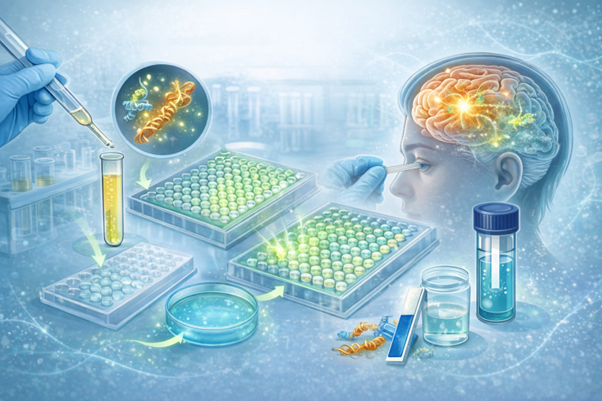
In fact, researchers confirmed that this protein had a greater ability to differentiate samples from positive patients from healthy controls than any of those used to date in cerebrospinal fluid. The test not only worked better in CSF but also in tears, thus allowing a biomarker to be obtained in a fluid that, having far fewer proteins than blood, presents fewer potential contaminants that could interfere with the assay. The test was positive for samples from a cohort of patients with sporadic Creutzfeldt-Jakob disease, as well as carriers of different genetic CJD mutations, and FFI and GSS (which have been detected in a high percentage of cases and were notably difficult to detect with this type of test to date).
Although the study has some limitations, and in some cases positive samples are not recognised, or patients with other neuropathies such as Alzheimer's disease are identified as positive, the percentage in which this occurs is very low and the researchers are convinced that they have found a minimally invasive test that allows the diagnosis of different prion diseases through RT-QuIC. In addition, it could be used to develop clinical histories that would allow the therapeutic window of future therapies to be predicted.
The authors of the study would like to thank the Spanish Prion Disease Foundation for donating prion-free tear fluid samples, which served as negative controls and enabled the study to be carried out.
Click here to read the original article (in English).
 English (UK)
  Español
  Français