Autor: Sara Caballero
A recent study coordinated by the European Reference Laboratory for Transmissible Spongiform Encephalopathies (EURL-TSE) has examined how biosecurity measures are implemented in European laboratories working with prion diseases, such as Creutzfeldt-Jakob disease (CJD), bovine spongiform encephalopathy (BSE) and other related diseases.
The study, based on a survey of 31 national reference laboratories across Europe, highlights significant progress, but also areas where further improvements are still needed to protect staff working with these types of infectious agents.
Why are prions particularly dangerous in the laboratory?
Prion diseases are caused by misfolded proteins, known as prions, which accumulate mainly in the central nervous system.
Unlike bacteria or viruses, prions have characteristics that make them particularly complex, as they contain no genetic material and do not trigger an immune response. Furthermore, they are highly resistant to standard disinfection methods, remaining active even after standard decontamination processes.
This means that working with potentially infected tissues requires very specific safety measures, as one typically works with tissues with a high prion load or content, such as brain and cerebrospinal fluid samples.
Furthermore, although the risk is low, cases of occupational transmission among laboratory staff have been reported, which has heightened concern within the scientific community.
What did this study analyse?
The study involved a survey sent to the 31 European national reference laboratories specialising in prion diseases.
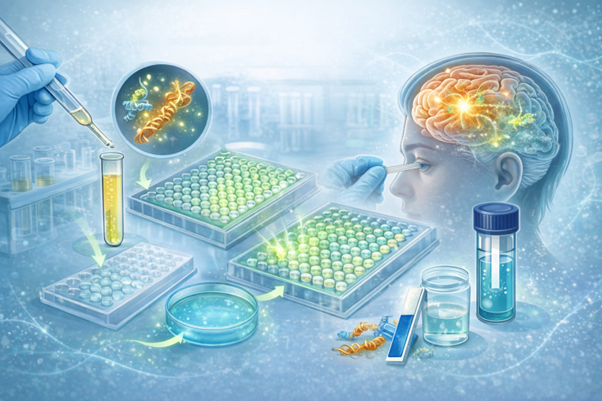
Aspects such as biosafety protocols, staff training, biosafety levels, decontamination procedures, incident management and the handling of high-risk samples were assessed.
The aim of the study is to ascertain whether all laboratories apply similar measures and to identify any potential weaknesses.
Good news: most laboratories apply adequate safety measures
The results were, on the whole, positive.
Most laboratories use specific biosafety guidelines, restrict access to authorised personnel only, provide specific training for staff, use biological safety cabinets and have procedures in place for the safe disposal of waste.
Furthermore, virtually all centres carry out diagnostic activities safely.
However, significant differences still exist
One of the most significant findings is that the measures are not applied uniformly across all laboratories.
In other words, not all laboratories follow exactly the same protocols.
Some of the differences identified included the absence of specific guidelines for prions in some centres, the lack of specific protocols for certain techniques, and differences in formal risk assessment.
This is important because not all laboratory procedures involve the same level of exposure.
For example, techniques such as ELISA and Western blot, as well as experimental inoculations, can increase the risk if not carried out under specific protocols, given that they generally involve working with brain samples, an organ containing a very high prion load.
The use of sharp instruments: one of the main risks
The study highlights that one of the most significant risks to staff is the use of sharp instruments such as needles or scalpels. Indeed, some of the workplace accidents described in other studies were linked to accidental pricks or cuts, almost always whilst handling samples of infected brain tissue.
The researchers therefore stress the need to avoid their use wherever possible and to apply strict protocols when they are essential
The importance of risk assessment
Another key aspect is the formal assessment of biological risk.
This means carefully assessing which samples are being handled, as not all biological samples have the same infectious load or prion load; the most dangerous being samples of brain tissue or cerebrospinal fluid, as mentioned earlier. Furthermore, it is important to assess which procedures are carried out, what equipment is used and what risks exist for staff
The study shows that not all laboratories have completed this process in a structured manner.
The authors emphasise that this assessment is not merely a technical matter, but also an organisational and managerial one, as it requires institutional support and resources.
What will happen from now on?
In response to the findings, the European reference laboratory has launched several initiatives, including the creation of a digital repository of guidelines and protocols, the holding of regular meetings between European laboratories, the exchange of good laboratory practices, and the monitoring of improvements through future surveys.
The aim is to standardise procedures across Europe and minimise any occupational risks.
At the Spanish Prion Diseases Foundation, we particularly value the publication of studies such as this one, which not only help to improve the safety of professionals working with prion diseases, but also strengthen the quality and coordination of research in Europe.
Every improvement in procedures, staff training and risk assessment represents an important step towards furthering our understanding of prion diseases and laying a more solid foundation for future progress.
Click here to read the original article (in English).


 English (UK)
  Español
  Français